YOLO Object Detection
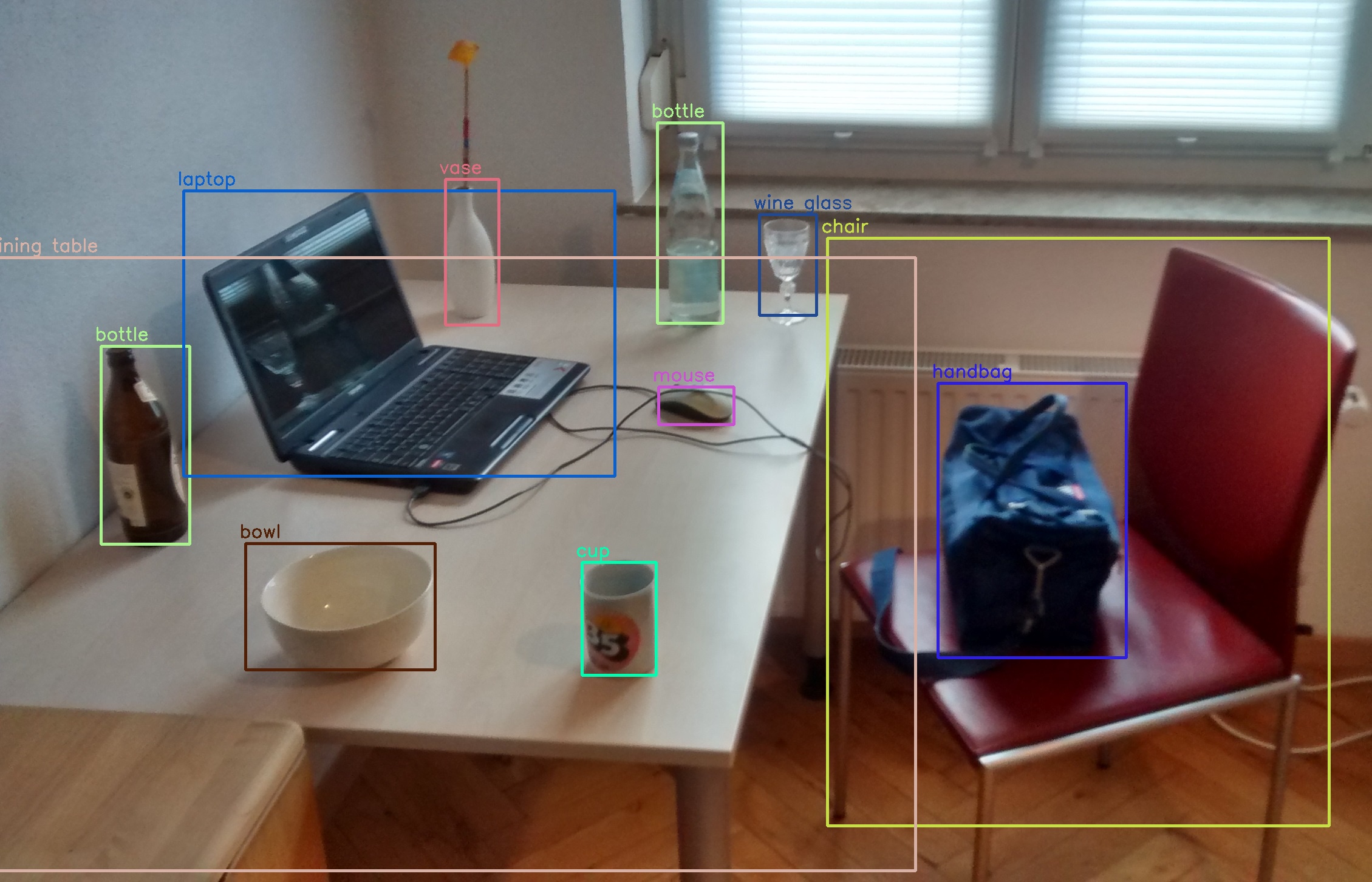
Summary: On June 27, 2016, Joseph Redmon and his research team revolutionized computer vision by introducing YOLO, a groundbreaking software framework that transformed object detection from a sluggish, multi-step process into a single, lightning-fast neural network pass.
In the early days of computer vision, machines identified objects by laboriously scanning an image multiple times, much like someone searching for a hidden item in a picture by moving a magnifying glass over every square inch. On June 27, 2016, researchers in Seattle, Washington, changed this approach forever. They introduced YOLO Object Detection, a system that looks at an entire image just once—hence the name "You Only Look Once"—to identify what is in the scene and exactly where it is located. This breakthrough allowed computers to see the world in real-time, making it possible for software to track moving objects with the speed of human perception.
| Historical Attribute | Milestone Registry Value |
|---|---|
| Classification Type | software |
| Chronological Date | 2016-06-27 |
| Coordinates / Location | Seattle, Washington |
| Curation Authority | Nick Hodder + MIA |
| Milestone Importance | standard Milestone |
How does YOLO Object Detection fit into the history of artificial intelligence?
The development of YOLO Object Detection represents a pivotal shift from the rigid, rule-based systems of the mid-20th century, such as the The Perceptron, toward the highly capable deep learning era. Following the success of architectures like AlexNet Convolutional Net in 2012, the field of computer vision was dominated by complex pipelines. Researchers had previously relied on "sliding-window" techniques, where separate components were responsible for proposing regions of interest and classifying the contents of those regions. This fragmented approach, while accurate, was computationally expensive and slow. By 2016, the maturation of hardware, specifically the rise of high-performance GeForce GPU Coined technology, created an opening for a more holistic, unified approach to machine perception.
What are the core technical achievements of YOLO Object Detection?
The primary achievement of YOLO Object Detection was the reformulation of object detection as a single regression problem. Instead of performing classification on thousands of tiny image patches, the network divides an image into an S x S grid. For each grid cell, the system simultaneously predicts bounding box coordinates and class probabilities. This structural change eliminated the need for complex, multi-stage processing. The original iteration of the model achieved speeds of 45 frames per second on a standard GPU, with a smaller version, "Fast YOLO," achieving 155 frames per second. This was orders of magnitude faster than competing methods at the time, which often operated at less than 10 frames per second. By processing the entire image in one forward pass, the model gains global context about the objects, which significantly reduces the frequency of background errors compared to localized classifiers.
Why is the legacy of YOLO Object Detection significant to modern computing?
The influence of YOLO Object Detection extends deep into the infrastructure of contemporary technology. It provided the template for real-time visual awareness required by subsequent breakthroughs like the Stanley Autonomous SUV legacy and more modern robotics applications. Because the architecture was designed to be lean and efficient, it enabled computer vision to migrate from bulky data center servers to embedded devices, such as cameras, drones, and handheld sensors. The design philosophy of "looking once" influenced later high-performance architectures, ensuring that speed and accuracy could coexist in production environments. Without the efficiency benchmarks established by this milestone, the widespread deployment of edge-computing vision systems would have been delayed by years, fundamentally altering the trajectory of robotics and automated monitoring systems in the following decade.