The Transformer Paper
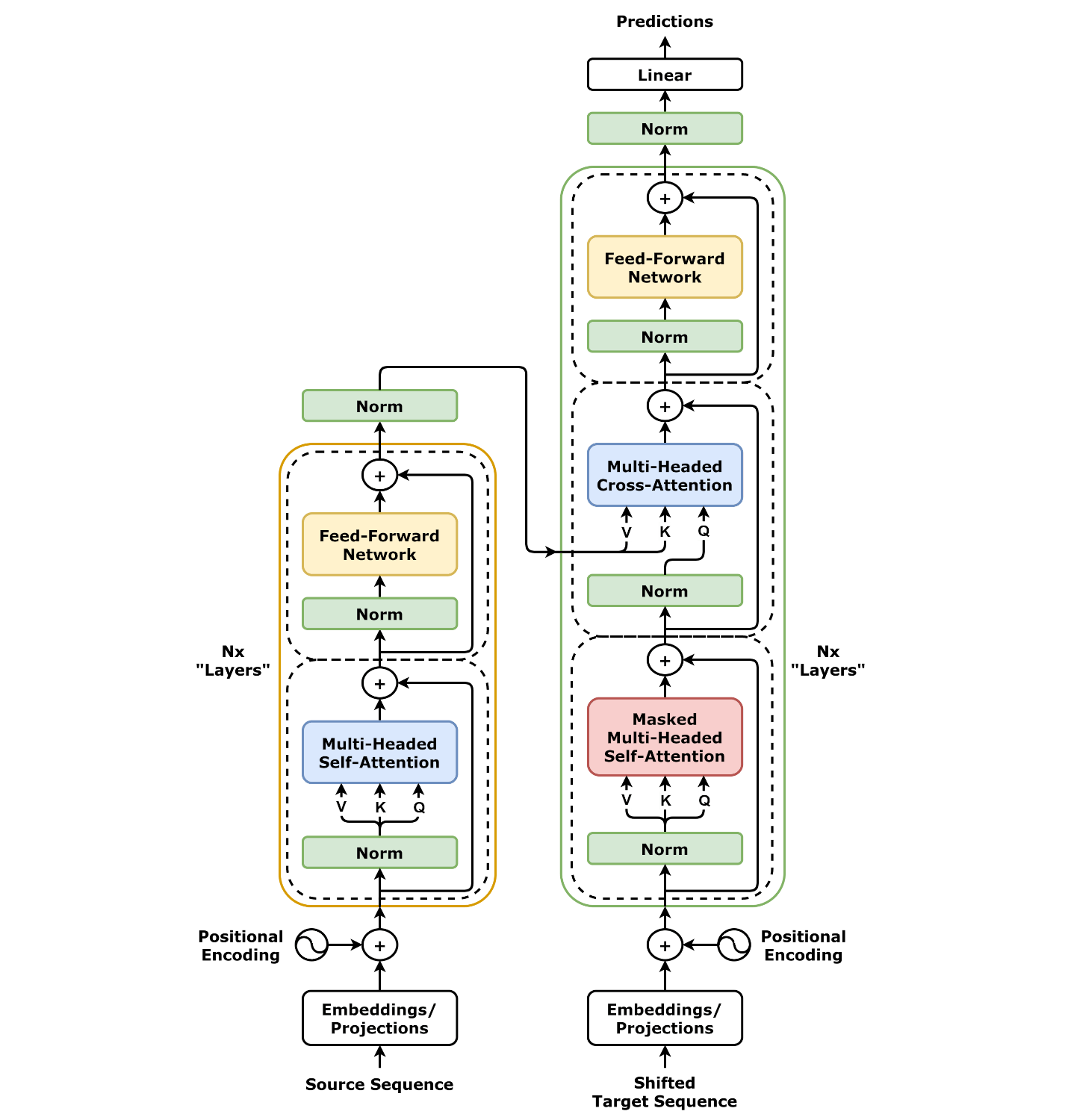
Summary: On June 12, 2017, a team of researchers at Google, led by Ashish Vaswani, fundamentally altered the trajectory of machine learning by publishing "Attention Is All You Need," a paper that introduced the Transformer architecture and established self-attention as the definitive mechanism for language processing.
In the summer of 2017, computer scientists based in Mountain View, California, unveiled a new mathematical framework for understanding information. This discovery, dated June 12, 2017, shifted how machines interpret sequences of data, such as sentences in a book. Before this innovation, computers struggled to keep track of distant parts of a long message, often forgetting the beginning of a paragraph by the time they reached the end. The Transformer solved this by allowing the machine to look at every part of the input simultaneously, weighing the importance of each word relative to every other word, regardless of their distance. This approach, known as self-attention, removed the need for the step-by-step reading processes that had defined earlier computational models.
| Historical Attribute | Milestone Registry Value |
|---|---|
| Classification Type | software |
| Chronological Date | 2017-06-12 |
| Coordinates / Location | Mountain View, California |
| Curation Authority | Nick Hodder + MIA |
| Milestone Importance | godfather Milestone |
How does The Transformer Paper fit into the history of artificial intelligence?
The development of the Transformer occurred as a refinement of decades of research into artificial neural networks. The foundational work of McCulloch-Pitts Neural Model in 1943 established the possibility of biological-style computation, which evolved through the The Perceptron and eventually Backpropagation Popularized in the 1980s. Throughout the 2010s, researchers relied heavily on architectures like the Long Short-Term Memory (LSTM) and the Seq2Seq Architecture to handle sequences. However, these older models processed data sequentially, creating significant bottlenecks in computational efficiency. The Transformer represents a clean break from these traditions, abandoning recurrence in favor of a parallel-processing approach that makes optimal use of the hardware advancements made possible by the GeForce GPU Coined and later the TPU v1.
What are the core technical achievements of The Transformer Paper?
The primary technical achievement of the Transformer is the mechanism of "Scaled Dot-Product Attention." By calculating how much each word in a sequence relates to every other word, the model generates a context-aware representation of language that is far superior to previous statistical methods like Word2Vec Representation. This architecture allows for massive parallelization during training, as the system does not need to wait for a previous word to be processed before moving to the next. In the original paper, the authors demonstrated that this design not only provided higher quality translations than existing recurrent models but also required a fraction of the total training time, measured in floating-point operations. By 2017, the shift toward this architecture signaled the end of the dominance of LeNet-5 Convolutional Net variants for complex, long-form sequence modeling tasks.
Why is the legacy of The Transformer Paper significant to modern computing?
The long-term significance of the Transformer lies in its scalability. The architecture’s ability to be distributed across massive clusters—such as the TPU v4 Supercluster—led directly to the era of large-scale foundation models. Following the publication, subsequent breakthroughs such as BERT Language Model and GPT-1 Language Model validated that the architecture could be scaled by orders of magnitude in both parameter count and training data. This milestone paved the way for the development of GPT-3 Language Model and eventually multimodal systems like GPT-4 Multimodal Model. Furthermore, the accessibility of this architecture was bolstered by software ecosystems like the Hugging Face Transformers library, ensuring that the technology would influence nearly every field of contemporary software, from code generation in GitHub Copilot Developer to biological discovery in AlphaFold 2 Biological Model.