TPU v1
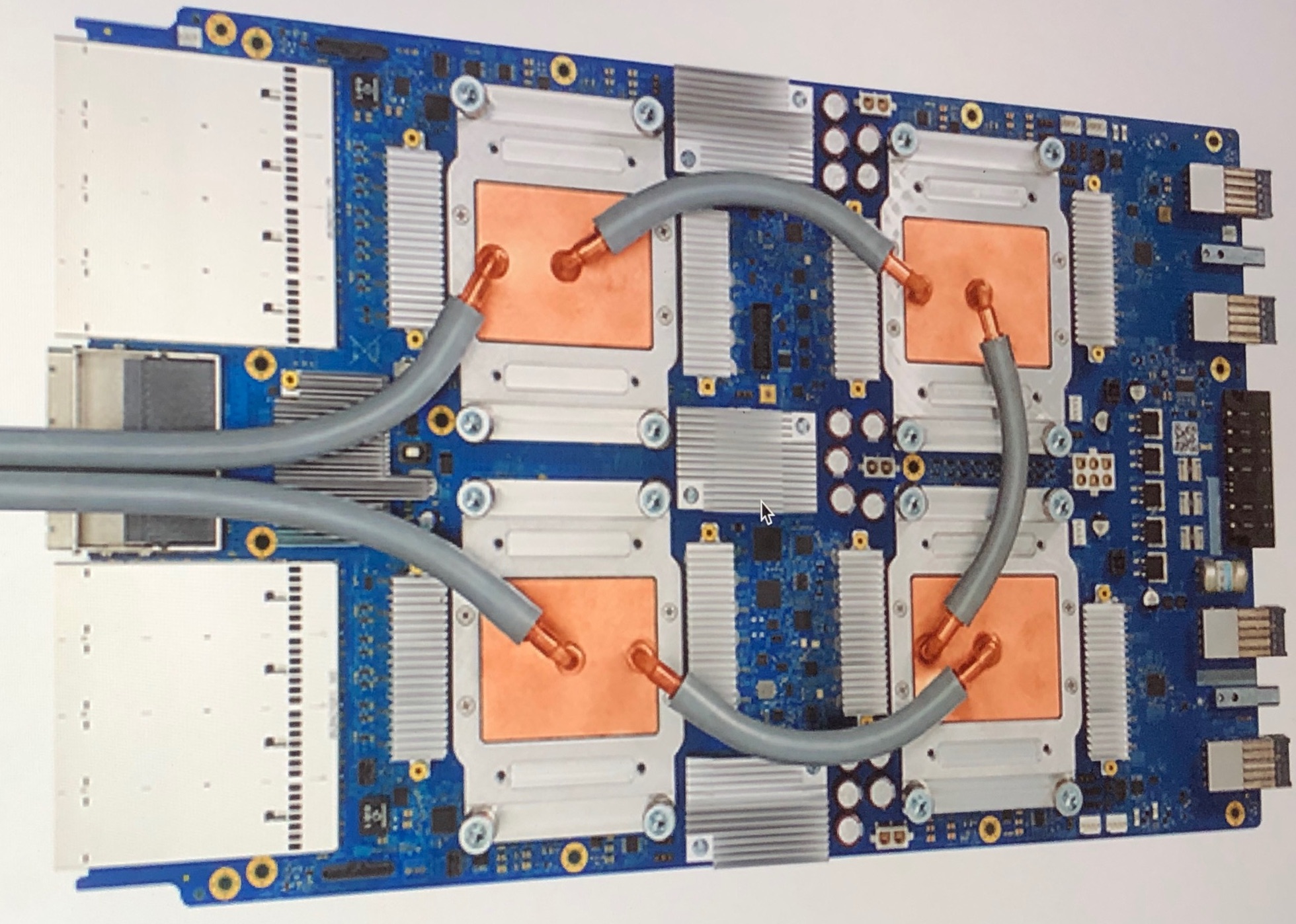
Summary: On June 1, 2015, the landscape of high-performance computing shifted with the official deployment of the TPU v1, a specialized Application-Specific Integrated Circuit (ASIC) engineered to execute the intensive mathematical operations required by neural networks with unprecedented speed and efficiency.
In the summer of 2015, researchers in Cambridge, Massachusetts, introduced a machine that would redefine how computers think. Named the TPU v1, this hardware was not a general-purpose processor but a dedicated brain for artificial intelligence, built to handle the complex, repetitive math that makes modern learning models work. By focusing strictly on the requirements of LeNet-5 Convolutional Net and similar architectures, the TPU v1 bypassed the bottlenecks found in traditional computers, allowing for much faster processing of visual and linguistic data. It remains a foundational pivot point in the shift from general-purpose hardware toward the specialized infrastructure that powers the AI era today.
| Historical Attribute | Milestone Registry Value |
|---|---|
| Classification Type | machine |
| Chronological Date | 2015-06-01 |
| Coordinates / Location | Cambridge, Massachusetts |
| Curation Authority | Nick Hodder + MIA |
| Milestone Importance | standard Milestone |
How does TPU v1 fit into the history of artificial intelligence?
The evolution of artificial intelligence has been constrained by the physical limits of hardware since the earliest days of the Dartmouth Workshop. For decades, researchers relied on CPUs designed for logic and file management, and later, GPUs adapted from the gaming industry to handle parallel mathematical tasks. By 2015, the computational demands of deep learning—modeled after the McCulloch-Pitts Neural Model—had outpaced these general-purpose chips. The deployment of the TPU v1 marked the end of the "repurposed hardware" era. It represents the point where AI became important enough to justify the creation of silicon tailored specifically to the needs of neural networks, bridging the gap between theoretical models like the The Perceptron and the massive, production-grade intelligence systems of the modern day.
What are the core technical achievements of TPU v1?
The technical brilliance of the TPU v1 lies in its architecture, which replaces standard control and cache mechanisms with a "systolic array." In a standard CPU or GPU, the processor must constantly fetch data from memory, which is a slow and energy-consuming process. The TPU v1 uses a grid of multipliers that pass data directly to each other, like a bucket brigade, minimizing the need for memory access during matrix multiplications—the fundamental operation in nearly every neural network.
By stripping away the complex logic circuits used for branching and prediction—features necessary for desktop software but redundant for neural networks—the TPU v1 gained an efficiency advantage of 15x to 30x over the server-class CPUs and GPUs of that time. This leap in performance-per-watt meant that data centers could perform significantly more inference operations—the process of putting a trained model to work—without requiring massive cooling infrastructure or additional electricity, fundamentally altering the economics of operating large-scale neural architectures.
Why is the legacy of TPU v1 significant to modern computing?
The legacy of the TPU v1 extends far beyond its specific performance metrics. It ushered in the "custom silicon" movement, proving that specialized hardware could yield exponential improvements where general processors hit a plateau. This shift influenced the development of subsequent architectures, leading to the creation of the TPU v2 Pod and the TPU v4 Supercluster, which are capable of training models that were previously thought to be impossible to compute.
Furthermore, the success of the TPU v1 helped solidify the infrastructure required for the TensorFlow Platform, creating a tightly integrated ecosystem of hardware and software. By enabling researchers to iterate faster and deploy models at scale, the TPU v1 provided the backbone for the rapid advancement of architectures like the The Transformer Paper and modern generative models. It remains the prime example of how hardware architecture dictates the boundaries of what is possible in software, ensuring that the hardware of today can support the grand, compute-hungry ambitions of tomorrow.