Geoffrey Hinton
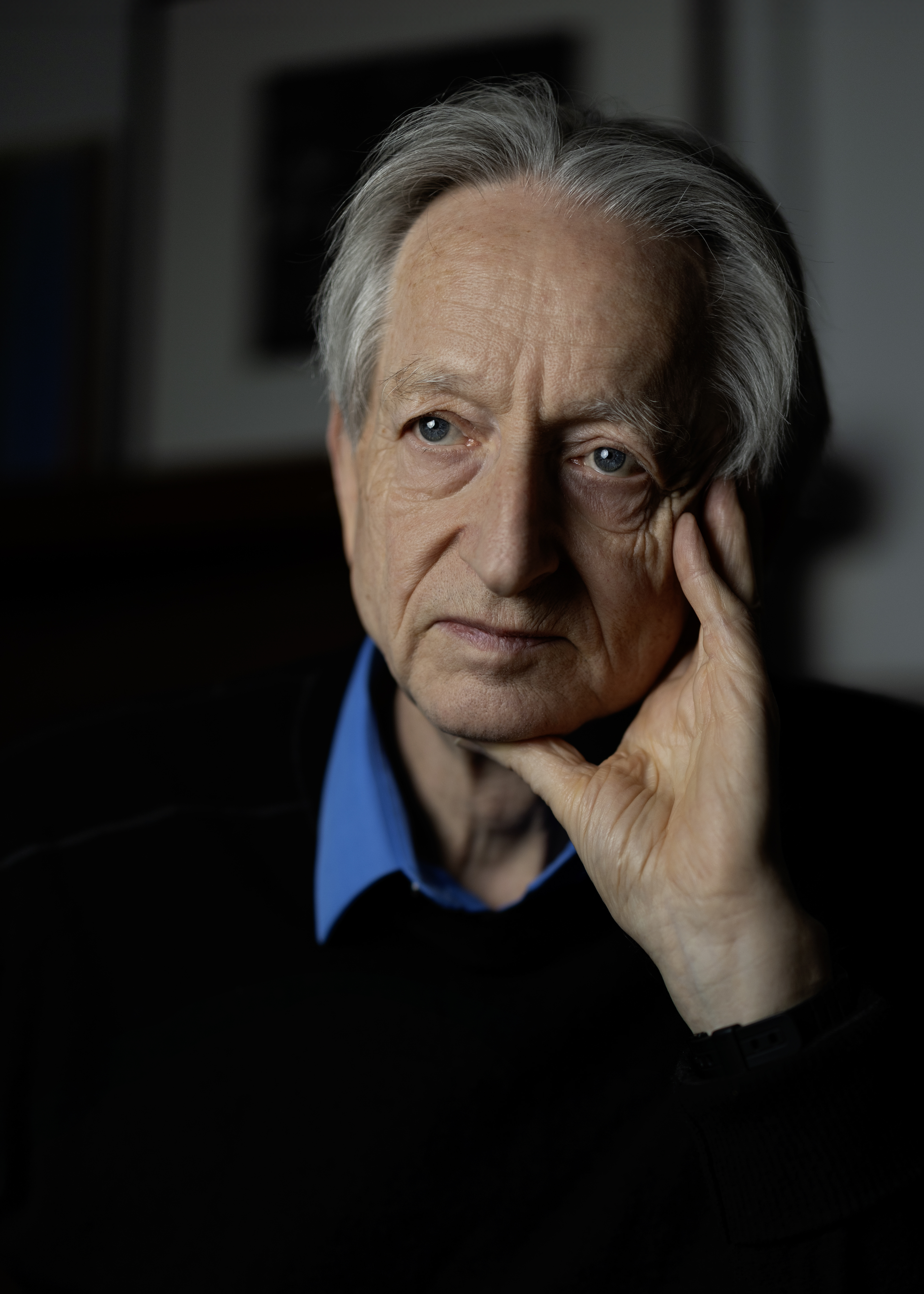
Summary: Geoffrey Hinton is widely regarded as a founding architect of modern machine learning, whose pioneering work on backpropagation and deep neural networks transformed our understanding of how machines can learn from data, culminating in his 2018 Turing Award.
On October 9, 1986, a seminal moment in computer science occurred when Geoffrey Hinton, along with David Rumelhart and Ronald Williams, published their landmark research on the backpropagation algorithm. This event, centered in research circles that would eventually anchor in Toronto, Canada, marked a shift away from rigid symbolic logic toward systems that could learn by adjusting their own internal structures. By enabling computers to refine their performance through trial and error on a massive scale, this work effectively laid the foundation for the current era of artificial intelligence.
| Historical Attribute | Milestone Registry Value |
|---|---|
| Classification Type | person |
| Chronological Date | 1986-10-09 |
| Coordinates / Location | Toronto, Canada |
| Curation Authority | Nick Hodder + MIA |
| Milestone Importance | godfather Milestone |
How does Geoffrey Hinton fit into the history of artificial intelligence?
The history of AI began with early efforts like the McCulloch-Pitts Neural Model and the The Perceptron, which attempted to mimic the brain's structure. However, these efforts hit walls, notably identified in the Perceptrons Book Published in 1969. Geoffrey Hinton emerged as a central figure who helped the field overcome these limitations. While others focused on symbolic logic, Hinton remained committed to the study of connectionism. He kept the dream of neural networks alive during the AI Winter 1 and subsequent periods of skepticism, ensuring that the study of layered artificial neurons would survive to become the dominant paradigm of the 21st century.
What are the core technical achievements of Geoffrey Hinton?
Hinton's technical contributions are foundational to the deep learning hierarchy. His 1986 paper popularized the Backpropagation Popularized method, a process that allows a neural network to calculate the error of its output and propagate that error backward to adjust the "weights" of the connections between neurons. This allows the system to get closer to the correct answer with every iteration.
Following this, he developed Boltzmann machines, which introduced probabilistic, energy-based models to learning. In 2006, he introduced Deep Belief Networks, which solved the challenge of training deep architectures efficiently. His most public-facing milestone arrived in 2012 with AlexNet Convolutional Net. By applying Dropout Regularization and running the model on high-performance graphical processing units, Hinton and his team achieved an error rate of 15.3% in the ImageNet competition, a massive 10.8 percentage point improvement over the next best entry, effectively signaling the start of the modern deep learning revolution.
Why is the legacy of Geoffrey Hinton significant to modern computing?
The impact of Hinton's work is omnipresent in today's digital infrastructure. His transition from theoretical connectionism to the high-performance training of deep models provided the blueprint for systems that can recognize images, translate languages, and predict complex data sequences. By providing the mathematical tools for networks to "learn" patterns rather than having rules explicitly programmed into them, he changed the nature of software development.
His work directly informed subsequent breakthroughs such as LeNet-5 Convolutional Net and the later evolution of The Transformer Paper architectures. Furthermore, his mentorship and collaborative research with individuals like Yann LeCun and Yoshua Bengio created a global academic framework that prioritized iterative, data-driven optimization. His influence is not merely technical but philosophical, as he pushed the field toward a greater appreciation for the potential of neural networks to solve problems previously thought to require human intuition and generalization.