DGX-1 Supercomputer
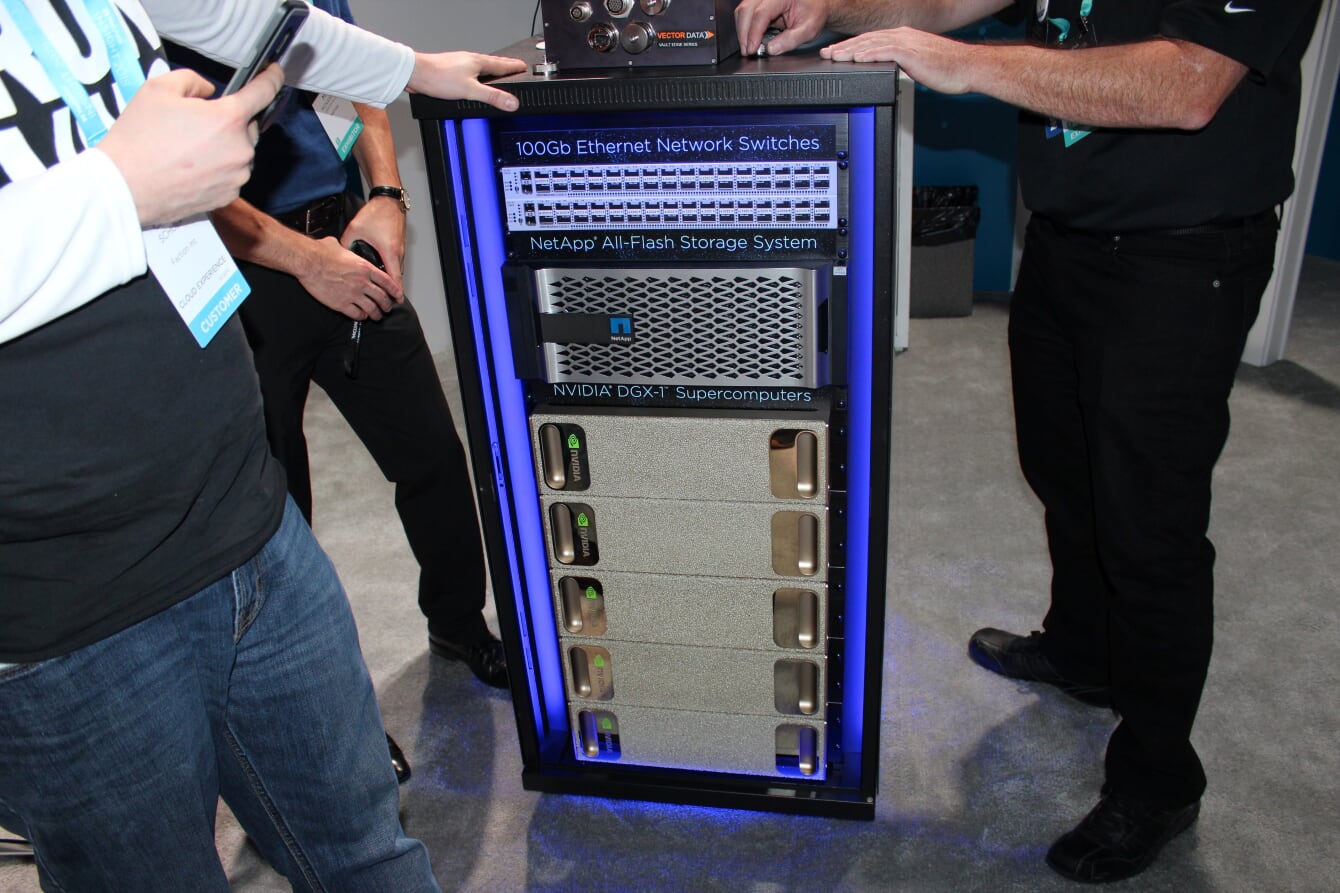
Summary: On April 6, 2016, in Pasadena, California, NVIDIA unveiled the DGX-1, a revolutionary supercomputer that effectively acted as the first integrated engine dedicated entirely to accelerating the training of massive neural networks.
In the spring of 2016, the field of artificial intelligence reached a critical physical bottleneck. As researchers began to move from simple data sets to complex deep learning models, they required more processing power than standard servers could provide. The DGX-1 Supercomputer solved this by packing eight high-performance Tesla P100 GPUs into one machine, allowing researchers to train large artificial "brains" in days rather than months. It transformed the development of AI from a slow, academic slog into a rapid, industrial-scale engineering challenge.
| Historical Attribute | Milestone Registry Value |
|---|---|
| Classification Type | machine |
| Chronological Date | 2016-04-06 |
| Coordinates / Location | Pasadena, California |
| Curation Authority | Nick Hodder + MIA |
| Milestone Importance | standard Milestone |
How does DGX-1 Supercomputer fit into the history of artificial intelligence?
The trajectory of AI has always been tied to available computing resources. From the early days of the SNARC Neural Simulator and the Logic Theorist, researchers sought to replicate human cognitive functions. However, progress was often hindered by the "AI Winters," periods where development stalled due to inadequate hardware. By 2012, with the success of AlexNet Convolutional Net, it became clear that deep learning was the path forward, but the existing hardware was fragmented.
The arrival of the DGX-1 Supercomputer marked a transition from general-purpose computing to specialized AI infrastructure. It followed decades of foundational research, including the work on Backpropagation Popularized and the Hopfield Network, providing the physical substrate required to execute these complex algorithms at scale. It essentially acted as a bridge between the theoretical breakthroughs of the 1980s and the massive, generative models that would emerge after 2017.
What are the core technical achievements of DGX-1 Supercomputer?
The primary achievement of the DGX-1 Supercomputer was its integrated architecture, which delivered 170 teraflops of half-precision floating-point performance. This was enabled by the eight Tesla P100 GPUs, which were connected via NVLink, a high-speed interconnect technology that allowed data to move between processors significantly faster than traditional PCIe buses.
Prior to this, building a system for large-scale training required researchers to custom-engineer server racks, which often suffered from latency and bottlenecks in data transfer. The DGX-1 Supercomputer simplified this by creating a "plug-and-play" appliance for deep learning. This allowed the training of models—which had previously taken weeks—to be completed in roughly 1/10th to 1/50th of the time, directly catalyzing the efficiency gains seen in later frameworks like PyTorch Framework and TensorFlow Platform.
Why is the legacy of DGX-1 Supercomputer significant to modern computing?
The legacy of this machine lies in its standardization of the AI hardware stack. By creating a template for how GPUs, memory, and high-speed interconnects should work together, it paved the way for the massive GPU clusters used today. Its success laid the foundation for subsequent hardware iterations, including the later NVIDIA H100 GPU and the Nvidia DGX B200, which maintain the architectural principles first perfected in the 2016 model.
Without the DGX-1 Supercomputer, the rapid iteration required for the development of architectures like the The Transformer Paper would have been significantly delayed. It shifted the competitive landscape of AI from purely algorithmic ingenuity to a combination of algorithmic research and massive-scale computation, a paradigm that continues to define the industry today.