ASIMO Robot
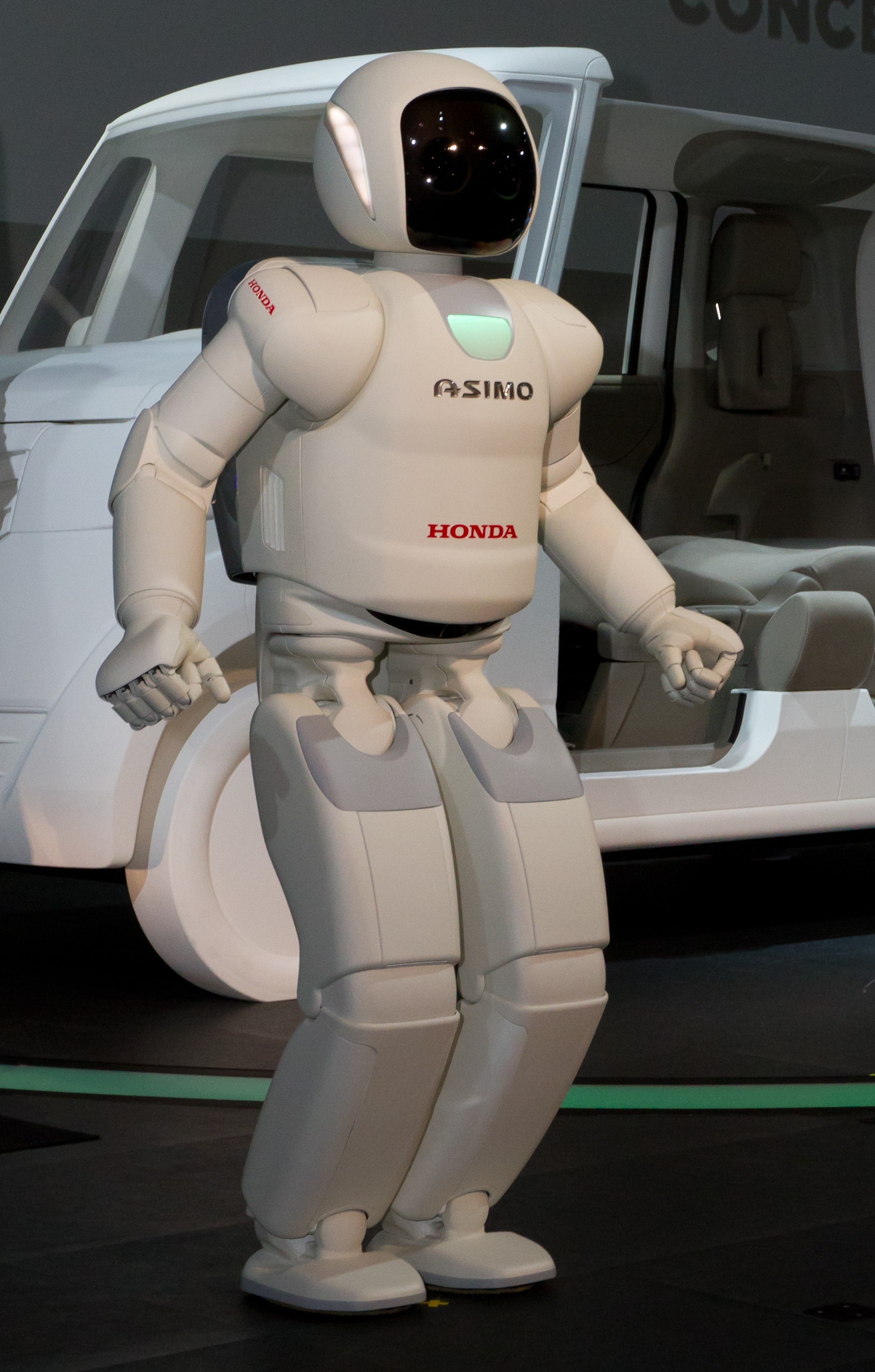
Summary: Unveiled in Tokyo on October 31, 2000, ASIMO stands as a watershed achievement in engineering, representing the first time a humanoid machine successfully mastered the complex mechanics of fluid, human-like bipedal locomotion, stair climbing, and real-time spatial navigation.
ASIMO—short for Advanced Step in Innovative Mobility—was developed by Honda as a long-term research project aimed at creating a robot that could coexist and work alongside humans. Introduced to the public on October 31, 2000, in Tokyo, Japan, the robot was the culmination of nearly two decades of research into legged movement. Unlike its predecessors, which were largely immobile or tethered, ASIMO demonstrated the ability to walk on two legs with a grace that mimicked human movement, an extremely difficult task in robotics because it requires maintaining balance against gravity in real-time.
| Historical Attribute | Milestone Registry Value |
|---|---|
| Classification Type | machine |
| Chronological Date | 2000-10-31 |
| Coordinates / Location | Tokyo, Japan |
| Curation Authority | Nick Hodder + MIA |
| Milestone Importance | standard Milestone |
How does ASIMO fit into the history of artificial intelligence?
In the broader chronology of robotics, ASIMO Robot serves as the bridge between the industrial automation pioneered by the Unimate Industrial Robot and the sophisticated autonomous systems of the 21st century. While early developments like Shakey the Robot focused on logic and basic navigation in controlled environments, ASIMO shifted the focus toward physical interaction. It operationalized the concepts explored in early Cybernetics Published research, specifically the feedback loops necessary for maintaining equilibrium. By physicalizing artificial intelligence, ASIMO helped transition the field from pure software processing, like the Samuel Checkers Program, into the domain of embodied intelligence.
What are the core technical achievements of ASIMO?
ASIMO's primary technical achievement lies in its high-speed, real-time "Predictive Movement Control" technology. To prevent the machine from falling, the onboard computer calculated the robot's center of gravity and adjusted its next step 50 times per second. This was a significant leap over the 1960s-era Stanford Cart, which moved slowly and required long processing times to determine a path. ASIMO featured 26 degrees of freedom, allowing for a range of motion that enabled it to climb stairs, walk at speeds of up to 1.6 kilometers per hour, and navigate around obstacles in real-time. It utilized a variety of sensors, including laser sensors and cameras, to map its environment, echoing the long-term quest for spatial awareness seen in later autonomous systems like the ALVINN Autonomous Vehicle.
Why is the legacy of ASIMO significant to modern computing?
The legacy of ASIMO is deeply embedded in the physical requirements of contemporary robotics. By standardizing the requirements for bipedal balance, it cleared the path for more advanced machines, such as the Boston Dynamics Atlas. Furthermore, its development highlighted the massive computational needs of robots interacting with unpredictable environments, a theme that remains central to modern efforts in reinforcement learning. While many contemporary projects focus on software models like GPT-4 Multimodal Model, ASIMO reminds the field that for artificial intelligence to fully integrate into human society, it requires an embodied platform capable of navigating the physical world with the same fluidity that algorithms display in virtual data processing. Its success at the turn of the millennium forced a re-evaluation of the boundary between machine capability and human-like physical dexterity.