Seymour Papert
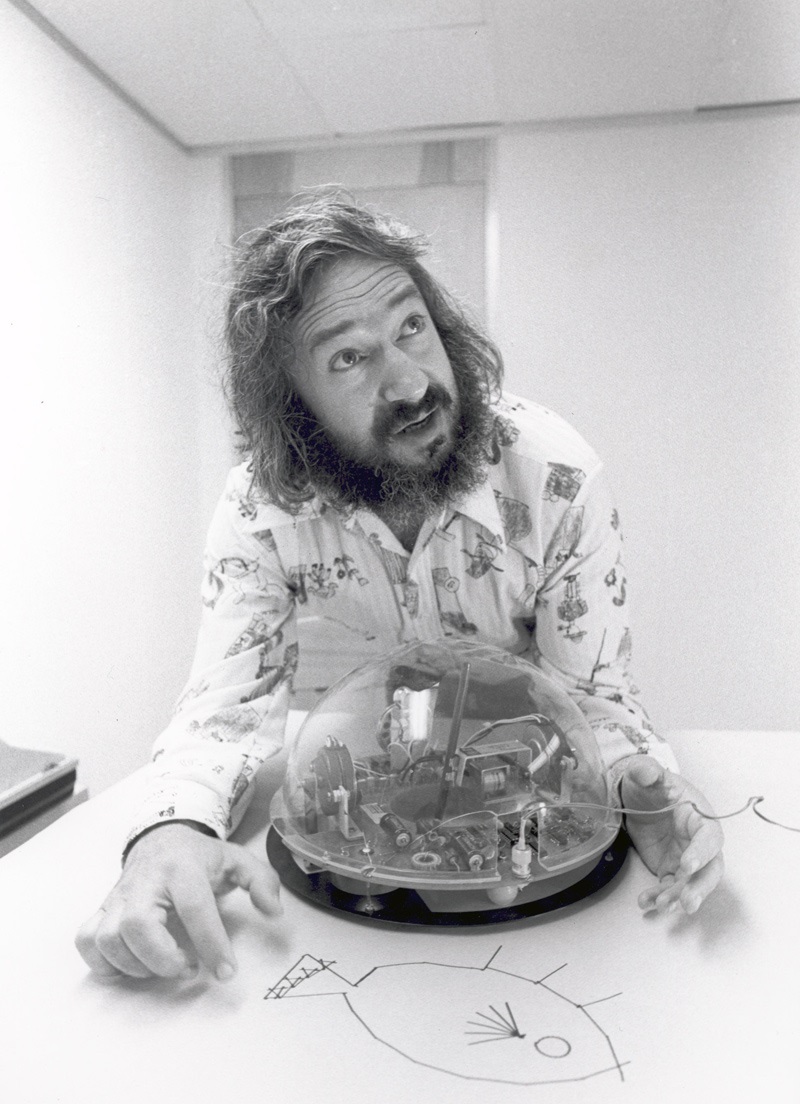
Summary: Seymour Papert, a visionary mathematician and educator, transformed the landscape of early computation on January 20, 1969, by championing a new philosophy of learning through his creation of the Logo programming language and his critical academic investigations into artificial intelligence.
On January 20, 1969, the publication of the book Perceptrons, co-authored by Seymour Papert and Marvin Minsky, served as a defining moment in the history of computer science. Based in Cambridge, Massachusetts, at the MIT AI Lab, Papert moved between the abstract world of neural mathematics and the practical world of human development. While his work in academic literature analyzed the limitations of simple the-perceptron models, his practical work with Logo invited children to treat the computer not as a calculator, but as a digital tool for "thinking about thinking." This milestone marks the bridge between the high-level research of the 1950s and 1960s and the democratization of programming for future generations.
| Historical Attribute | Milestone Registry Value |
|---|---|
| Classification Type | person |
| Chronological Date | 1969-01-20 |
| Coordinates / Location | Cambridge, Massachusetts |
| Curation Authority | Nick Hodder + MIA |
| Milestone Importance | standard Milestone |
How does Seymour Papert fit into the history of artificial intelligence?
Seymour Papert was a central figure during the formative years of the dartmouth-workshop generation of researchers. By becoming a co-director of the MIT AI Lab, he was positioned at the epicenter of efforts to replicate human intelligence. His contributions, however, were dual-natured. On one hand, he was a rigorous critic of the early neural network models of the time, such as those pioneered by frank-rosenblatt. The 1969 publication of Perceptrons provided a mathematical proof showing that these simple, single-layer networks could not solve non-linear problems, such as the exclusive-OR (XOR) function. This objective mathematical analysis contributed to a shift in funding and research focus away from neural networks for nearly a decade.
What are the core technical achievements of Seymour Papert?
Beyond the critique of neural models, Papert's most enduring technical legacy is the invention of the Logo programming language. Developed in the late 1960s, Logo was built upon the concepts of the lisp-programming-language but featured a graphical interface that allowed users to control a physical or virtual "turtle." This provided a tactile way for individuals to experiment with geometry, logic, and procedures. By 1970, this constructionist approach enabled children to command a computer to draw complex shapes, providing an immediate visual feedback loop that demystified the process of writing code. This shift from "instruction" (the machine telling the human what to do) to "construction" (the human instructing the machine) remains a fundamental pillar of modern educational computing.
Why is the legacy of Seymour Papert significant to modern computing?
The impact of Papert’s work is felt in the architecture of modern pedagogical tools and the ongoing debate surrounding machine learning. While his 1969 critique of early neural models was factually accurate regarding the limitations of simple systems at that time, it also spurred a more rigorous search for architectures capable of multi-layer learning, eventually leading to the development of backpropagation-formulated systems. Furthermore, his conviction that computers should be personal, creative, and accessible influenced the design of every subsequent personal computing environment. By advocating for the learner as an active participant, Papert ensured that computing would evolve into a medium of expression rather than merely a calculation engine, a shift that continues to influence how software interfaces are designed for millions of users worldwide today.