Paul Werbos
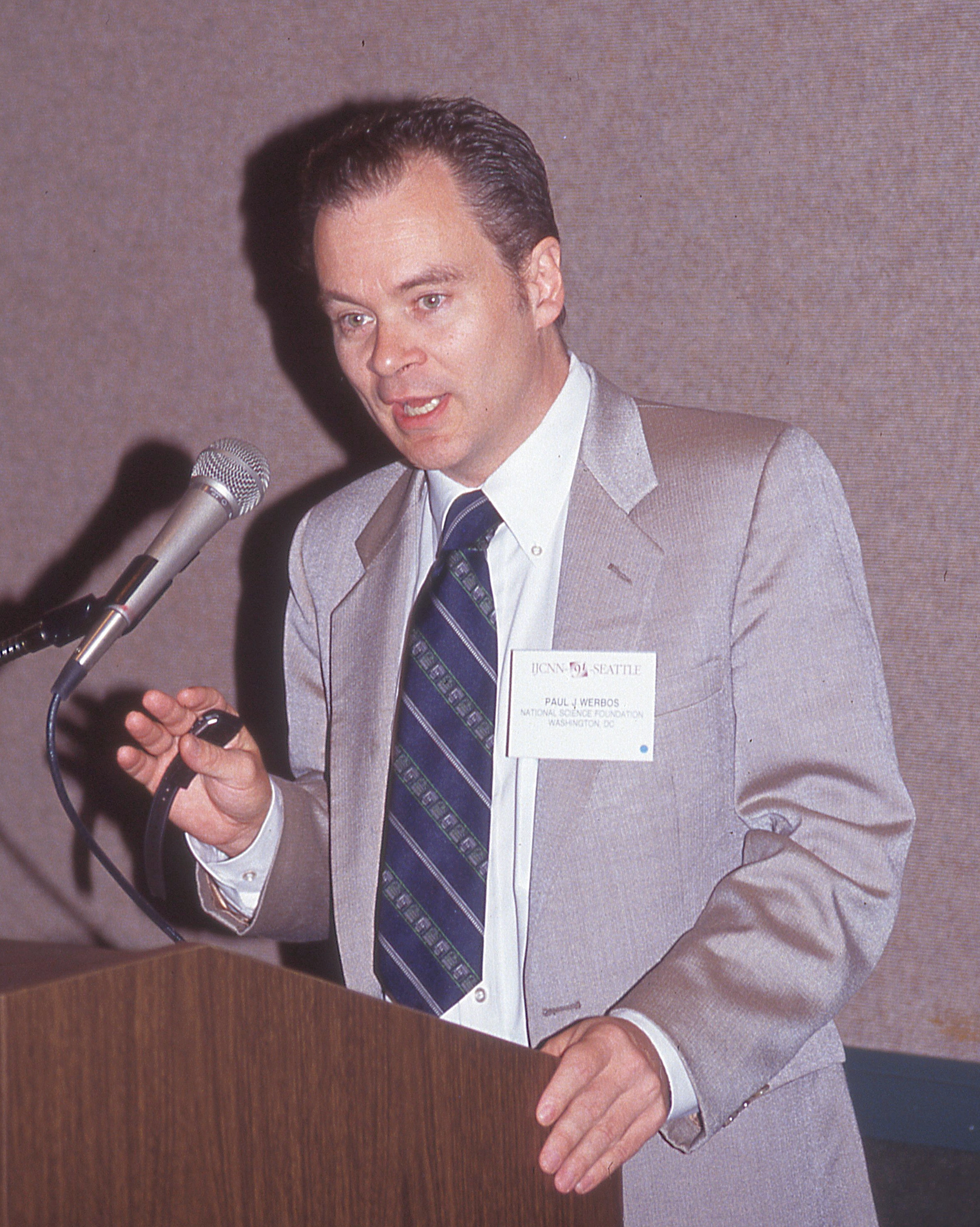
Summary: On August 31, 1974, Paul Werbos, a doctoral student at Harvard University, formally introduced the mathematical foundation for backpropagation, providing the critical mechanism for training deep neural networks through error-gradient feedback.
In the annals of computational science, the work of Paul Werbos represents a pivotal transition from theoretical exploration to functional machine learning. On August 31, 1974, in Cambridge, Massachusetts, Werbos submitted a PhD thesis that described a method for calculating derivatives of error functions within multi-layered networks. This process, known as backpropagation, acts like a teacher correcting a student: when the system makes a guess, it compares the result to the correct answer and traces the error backward through the layers to adjust every connection slightly. By doing this repeatedly, the system learns to minimize its mistakes, allowing for the training of complex, intelligent patterns that were previously impossible to compute.
| Historical Attribute | Milestone Registry Value |
|---|---|
| Classification Type | person |
| Chronological Date | 1974-08-31 |
| Coordinates / Location | Cambridge, Massachusetts |
| Curation Authority | Nick Hodder + MIA |
| Milestone Importance | standard Milestone |
How does Paul Werbos fit into the history of artificial intelligence?
The trajectory of artificial intelligence has been marked by cyclical periods of enthusiasm and stagnation. In the early 1950s, milestones such as the SNARC Neural Simulator and the birth of the The Perceptron sparked high expectations. However, by 1969, the publication of Perceptrons Book Published by Marvin Minsky and Seymour Papert highlighted the severe limitations of single-layer networks, effectively freezing research funding and leading to what is now known as the first AI Winter 1.
Paul Werbos arrived at Harvard during this period of skepticism. While the broader field was focusing on symbolic logic and expert systems, such as the MYCIN Expert System, Werbos persisted in exploring neural structures. His 1974 thesis provided the "missing link" that theoretical critics claimed did not exist: a robust, scalable way for machines to learn from their own failures in deep architectures.
What are the core technical achievements of Paul Werbos?
The primary achievement of Paul Werbos was the development of the "backpropagation of errors" algorithm. In a multi-layer network, every connection (weight) has an influence on the final output. Before 1974, there was no mathematically efficient way to determine how much each individual weight contributed to an overall error.
Werbos utilized the chain rule of calculus to calculate the gradient of an error function with respect to every weight in the network, starting from the output layer and working backward to the inputs. This effectively reduced the complexity of training from an intractable problem to one that could be solved in time proportional to the number of connections in the network. By shifting from local search heuristics to gradient-based optimization, Werbos enabled networks to tune their internal parameters precisely, turning simple processors into sophisticated function approximators.
Why is the legacy of Paul Werbos significant to modern computing?
The significance of the 1974 discovery took over a decade to permeate the scientific community, eventually reaching global prominence when it was popularized by Backpropagation Popularized in 1986. This algorithm became the backbone of virtually every major advancement in neural computing thereafter, from the LeNet Digit Classifier to the sophisticated The Transformer Paper architectures that power modern large-scale models.
Without the mechanism of backpropagation, the field might have remained locked in the era of limited perceptrons. Today, systems capable of training on massive datasets—often utilizing trillions of parameters—rely on variants of the very gradient-feedback loops proposed in 1974. The transition from the McCulloch-Pitts Neural Model to modern deep learning is essentially a history of how efficiently we can apply the error-correction logic pioneered by Werbos to increasingly powerful hardware environments.