Kismet Robot
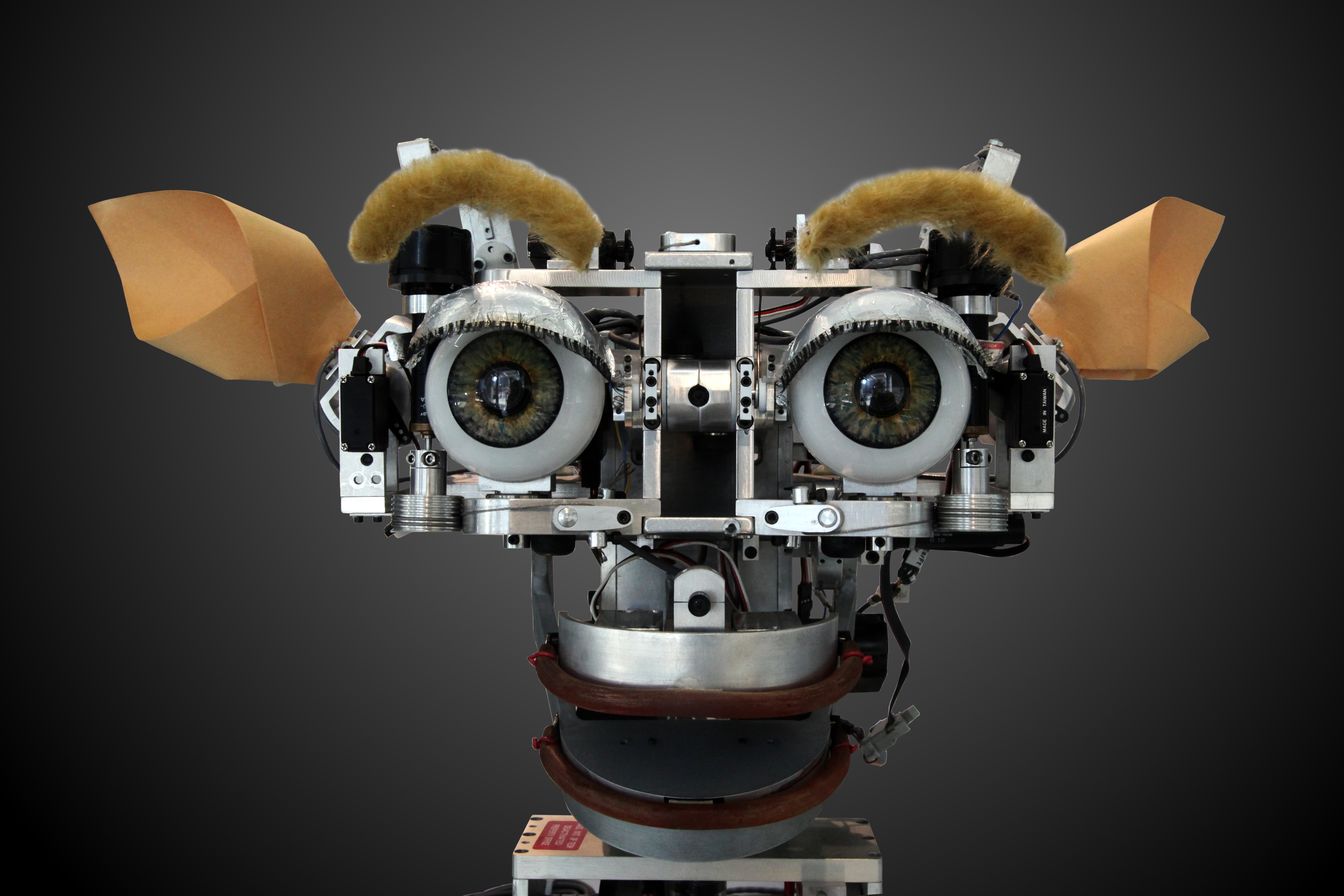
Summary: Unveiled on June 1, 1998, in Cambridge, Massachusetts, the Kismet robot represents a pivotal shift toward affective computing by serving as an interactive, expressive entity capable of engaging in primitive social exchanges with human users.
In June 1998, at the Massachusetts Institute of Technology, Cynthia Breazeal introduced Kismet, a robotic head designed specifically to participate in social interactions. Unlike the industrial robots that came before it, such as the Unimate Industrial Robot, Kismet was not built to perform repetitive physical labor. Instead, its purpose was to simulate the non-verbal social cues—like nodding, eye contact, and emotional facial expressions—that humans use to communicate with infants. By mimicking these developmental behaviors, Kismet functioned as an experimental platform for researchers to study how machines could learn to interact with people in a more natural, intuitive way.
| Historical Attribute | Milestone Registry Value |
|---|---|
| Classification Type | machine |
| Chronological Date | 1998-06-01 |
| Coordinates / Location | Cambridge, Massachusetts |
| Curation Authority | Nick Hodder + MIA |
| Milestone Importance | standard Milestone |
How does Kismet robot fit into the history of artificial intelligence?
Kismet occupies a unique space between the early, logic-driven symbolic AI of the Dartmouth Workshop and the modern, data-heavy machine learning systems like the AlexNet Convolutional Net. During the 1990s, the field of robotics was heavily influenced by the Subsumption Architecture, which favored decentralized, reactive systems over complex, top-down planning. Kismet applied these principles to the domain of social perception. It moved away from the "intelligence as calculation" paradigm established by the Logic Theorist and instead pursued "intelligence as interaction." By shifting the focus toward social cues, Kismet helped bridge the gap between traditional robotics and the affective computing field that would later influence modern human-computer interfaces.
What are the core technical achievements of Kismet robot?
Technically, Kismet was a marvel of sensory feedback loops. It utilized a vision system composed of several color cameras mounted within its eyes to detect motion, skin color, and eye-like shapes. The architecture was driven by a sophisticated "drives and motivations" system, where the robot sought to maintain a state of internal balance. If a human did not interact with it for a long period, Kismet would express "loneliness" through its facial motors, which controlled the eyebrows, ears, eyelids, and jaw. It featured 21 degrees of freedom, allowing for a nuanced range of expressions that could convey happiness, sadness, anger, or boredom in real-time. These responses were calibrated based on the tone and tempo of the human speech it processed, representing a high degree of integration between auditory input and mechanical output at the time.
Why is the legacy of Kismet robot significant to modern computing?
The legacy of Kismet lies in its demonstration that social engagement is a fundamental component of machine intelligence. Before Kismet, the Turing Test Proposed model focused primarily on text-based dialogue. Kismet extended this vision by arguing that "human-like" interaction requires non-verbal, physical signaling. This philosophy paved the way for subsequent developments in social robotics and human-robot collaboration. While later systems like the Roomba Consumer Robot or more advanced models like the Boston Dynamics Atlas prioritized utility or physical movement, Kismet proved that users are more likely to cooperate with machines that can convey emotional availability. Its influence can still be seen in the design of modern embodied AI and in the ongoing research into aligning complex computational outputs with human emotional states.