John Searle
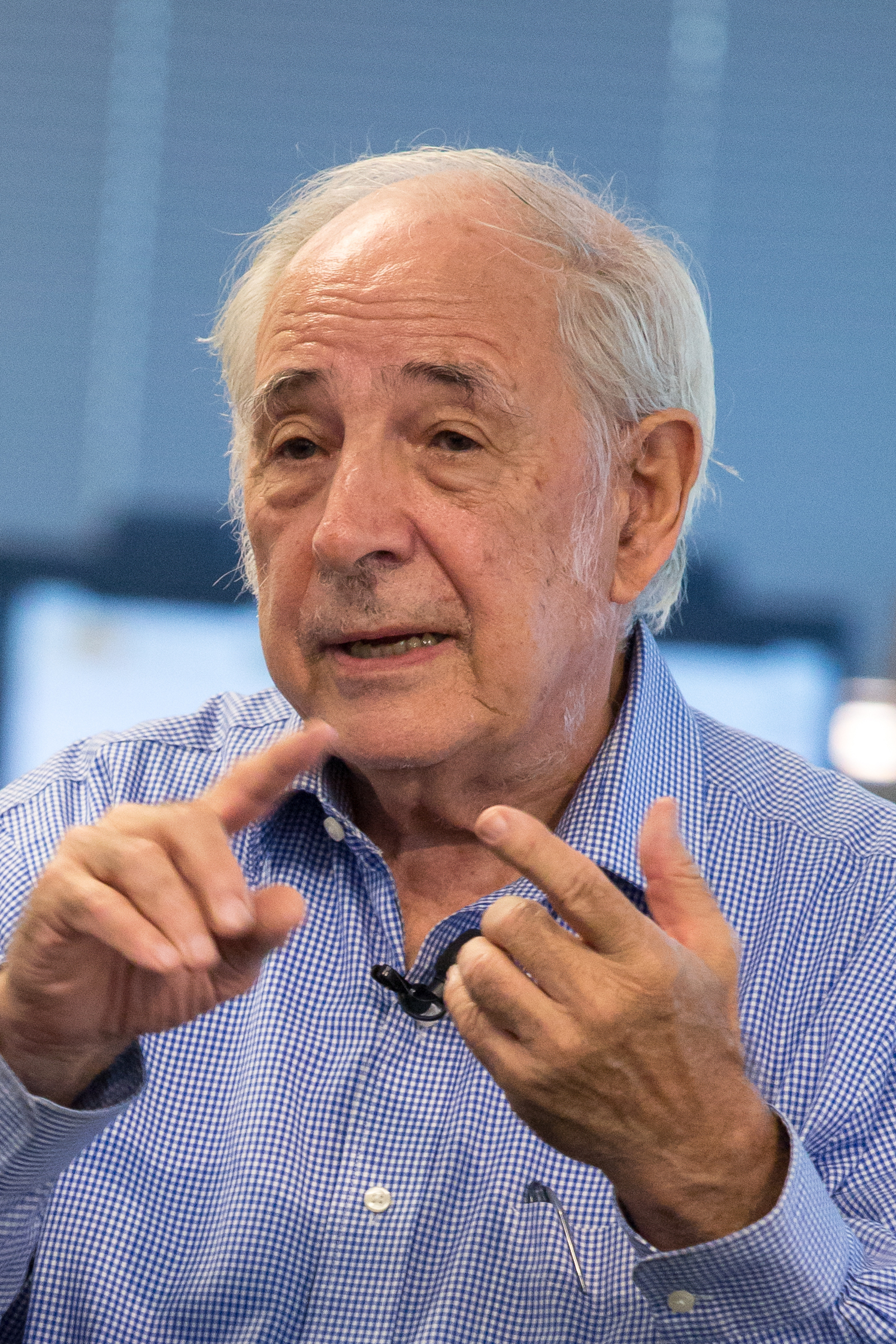
Summary: On September 1, 1980, philosopher John Searle fundamentally reshaped the field of artificial intelligence by introducing the "Chinese Room" thought experiment, a critique that argued that computers perform symbolic manipulation without achieving genuine understanding or consciousness.
In the autumn of 1980, working from Berkeley, California, John Searle published a landmark paper that challenged the fundamental optimism of the AI community. By presenting a hypothetical scenario known as the "Chinese Room," Searle questioned whether a machine that effectively simulates human conversation could be said to "understand" anything at all. This intervention occurred during a period of intense development in computational logic and early expert systems, serving as a philosophical counterweight to the technological ambition of the era.
| Historical Attribute | Milestone Registry Value |
|---|---|
| Classification Type | person |
| Chronological Date | 1980-09-01 |
| Coordinates / Location | Berkeley, California |
| Curation Authority | Nick Hodder + MIA |
| Milestone Importance | standard Milestone |
How does John Searle fit into the history of artificial intelligence?
John Searle emerged as one of the most prominent critics of "Strong AI"—the hypothesis that a properly programmed computer is, in fact, a mind. His work stands in direct contrast to the trajectory set by pioneers like Alan Turing, who proposed in his Turing Test Proposed that if a machine's output is indistinguishable from a human's, it should be considered intelligent. While researchers at the Dartmouth Workshop and creators of the Logic Theorist operated on the assumption that intelligence was a process of symbol processing, Searle argued that this approach ignored the biological and semantic requirements of true consciousness. His critique followed earlier skepticism, such as the Dreyfus Critique Published, placing him in a lineage of thinkers who questioned whether intelligence could be entirely detached from physical, biological reality.
What are the core technical achievements of John Searle?
The core of Searle's contribution is the "Chinese Room" argument. He proposed a thought experiment where a person who speaks only English is placed in a room. This person is given a rulebook that instructs them how to respond to Chinese characters slid under the door. To an outside observer, the person appears to understand Chinese perfectly. However, the person inside is merely following syntactic instructions to match shapes; they have no concept of what the characters mean. Searle concluded that programs like the ELIZA Chatbot achieve their results through similar rule-based symbol manipulation, which he claimed is categorically distinct from human semantic understanding. While the early McCulloch-Pitts Neural Model and the later The Neocognitron demonstrated that machines could approximate patterns, Searle insisted that even the most complex neural network, at its core, remains a computational mechanism devoid of intent.
Why is the legacy of John Searle significant to modern computing?
The legacy of the Chinese Room continues to frame debates around the capabilities of contemporary systems like the GPT-4 Multimodal Model. Despite massive advancements in machine learning architectures—from the Backpropagation Formulated era to the The Transformer Paper—the distinction between "statistical prediction" and "true understanding" remains a central point of contention. Statistically, modern systems demonstrate over 90% accuracy in various benchmarks, yet the question of whether they possess "intentionality" remains unresolved. Searle's 1980 work pushed the industry to categorize the difference between "weak AI," which is useful for specialized tasks, and "strong AI," which seeks to replicate consciousness. His influence is seen in the ongoing development of AI Safety Summit Bletchley discussions, where the alignment of machine logic with human values remains a paramount, yet philosophically complex, objective.