Claude Shannon
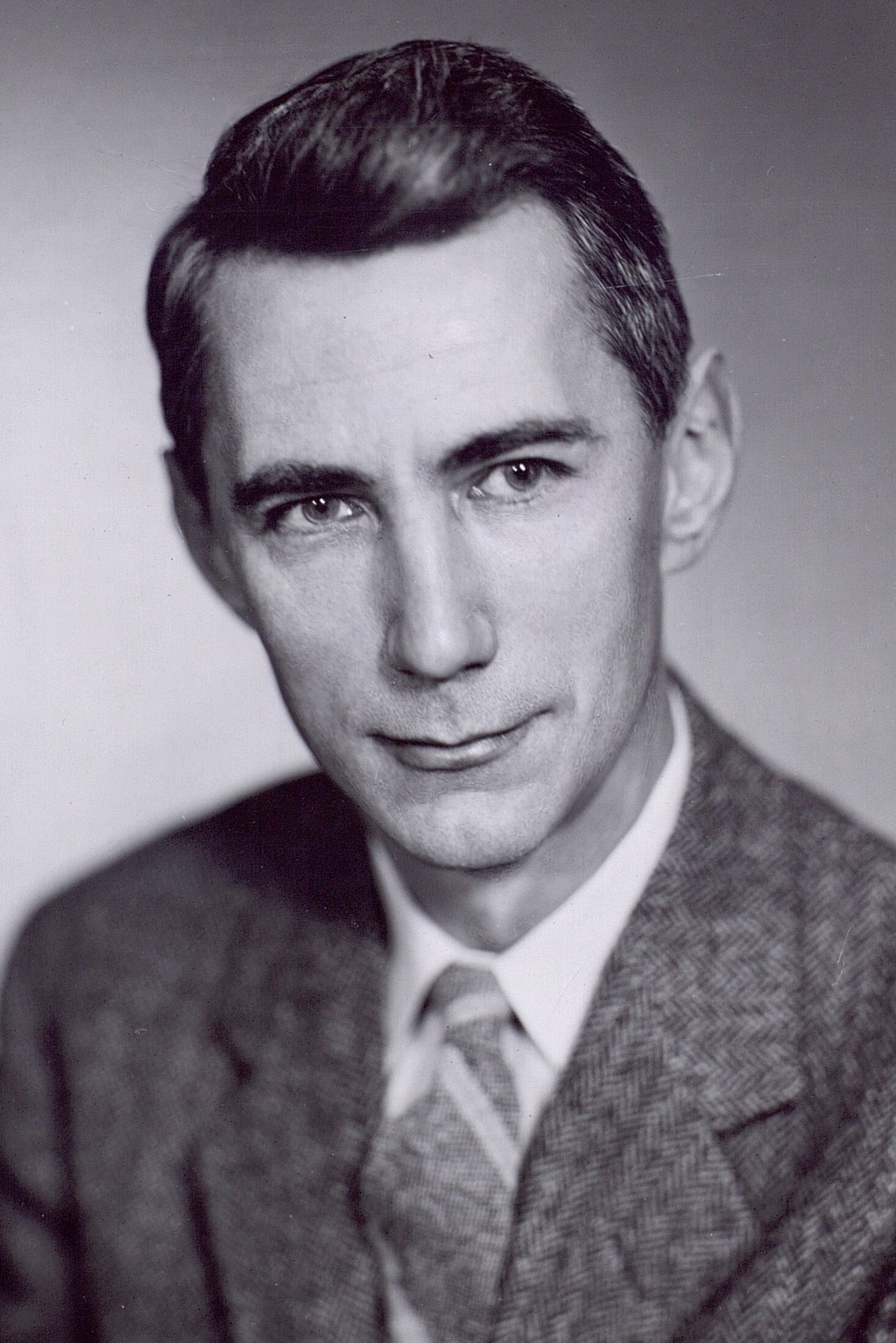
Summary: On May 15, 1937, a young graduate student named Claude Shannon transformed the landscape of human technology by proving that the rigid, logical rules of Boolean algebra could be physically manifested through the flicking of electrical switches.
In the spring of 1937, while working at the Massachusetts Institute of Technology in Cambridge, Massachusetts, Claude Shannon submitted a master's thesis that would serve as the foundational bedrock for all modern digital hardware. At a time when computers were primarily large, mechanical calculators, Shannon recognized that electrical circuits—which were either "on" or "off"—shared a fundamental structural similarity with the true/false logic developed by the 19th-century mathematician George Boole. By mapping these binary states to logical operations like AND, OR, and NOT, he unlocked the ability for machines to perform complex reasoning through electricity alone.
| Historical Attribute | Milestone Registry Value |
|---|---|
| Classification Type | person |
| Chronological Date | 1937-05-15 |
| Coordinates / Location | Cambridge, Massachusetts |
| Curation Authority | Nick Hodder + MIA |
| Milestone Importance | godfather Milestone |
How does Claude Shannon fit into the history of artificial intelligence?
Before the formal definition of AI Term Coined in the 1950s, engineers needed a reliable way to make hardware "think" in discrete steps. Shannon’s thesis provided the bridge between pure mathematics and electrical engineering. By demonstrating that any logical function could be built using simple switches, he enabled the creation of the complex processors necessary for the later development of the McCulloch-Pitts Neural Model and the sophisticated systems seen in the Dartmouth Workshop. Without the binary logic established in 1937, the concept of a machine performing symbolic reasoning would have remained in the realm of theory rather than engineering.
What are the core technical achievements of Claude Shannon?
The primary achievement was the rigorous mathematical proof that circuits of switches can solve any problem that can be expressed via propositional logic. Shannon identified that the "closed" (current flowing) or "open" (current blocked) states of a relay could be treated as 1 and 0. This allowed for the optimization of circuit complexity, significantly reducing the number of components needed to perform arithmetic calculations. His work was the first to formalize that digital computers are not just calculators, but universal logical engines. This insight was later cited by Alan Turing as a critical component in the evolution of modern programmable hardware.
Why is the legacy of Claude Shannon significant to modern computing?
The significance of this 1937 milestone lies in its universality; every single digital processor, from the earliest eniac" class="text-accent hover:underline font-semibold">ENIAC machine to the advanced NVIDIA H100 GPU architectures, relies on the same Boolean principles Shannon described. His work laid the foundation for information theory, which would eventually allow for the compression and transmission of data that powers global communication. Furthermore, the ability to build, verify, and scale software layers—like the LISP Programming Language or modern deep learning frameworks—rests entirely on the reliability of binary logic at the hardware gate level. Shannon’s work effectively ended the era of mechanical computation and initiated the age of the electronic computer, ensuring that the hardware could reliably execute the instructions needed for the rapid progress toward GPT-4 Multimodal Model and beyond.