Norbert Wiener
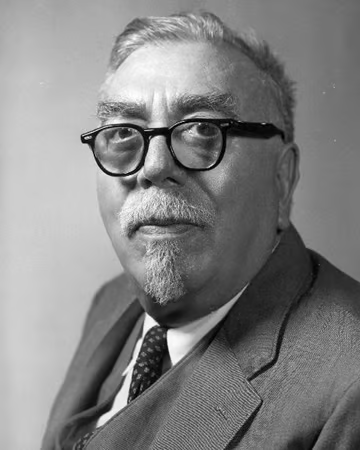
Summary: Norbert Wiener was a visionary polymath whose seminal work in the 1940s established the formal framework for cybernetics, fundamentally altering how humanity perceives the relationship between biological systems, machines, and the flow of information.
On October 15, 1948, the publication of the foundational text Cybernetics: Or Control and Communication in the Animal and the Machine marked a watershed moment in the history of science. Emerging from Cambridge, Massachusetts, this milestone introduced the world to a unified theory of command and control, bridging the gap between mechanical engineering and biological cognition. By identifying that both organisms and machines rely on feedback loops to regulate their behavior, the research established the bedrock upon which modern automated systems and robotics were built.
| Historical Attribute | Milestone Registry Value |
|---|---|
| Classification Type | person |
| Chronological Date | 1948-10-15 |
| Coordinates / Location | Cambridge, Massachusetts |
| Curation Authority | Nick Hodder + MIA |
| Milestone Importance | standard Milestone |
How does Norbert Wiener fit into the history of artificial intelligence?
Norbert Wiener is recognized as a bridge-builder between the era of electromechanical calculation and the era of self-correcting, autonomous systems. Before the field was officially given the name AI Term Coined in 1955, Wiener was already exploring the mathematical requirements for machines to "think" or, more accurately, to process information purposefully. His work provided the context that allowed for the McCulloch-Pitts Neural Model to gain broader significance, as he demonstrated how mathematical logic could describe the internal wiring of both biological brains and electronic calculators. He functioned as a critical link between the theoretical foundations laid by Alan Turing and the practical, iterative developments that would later emerge at the Dartmouth Workshop.
What are the core technical achievements of Norbert Wiener?
The primary achievement of Norbert Wiener was the formalization of the "feedback loop." He observed that for a machine to perform a task—such as steering a ship or pointing a gun—it must receive constant information about the gap between its current state and its target state. This error-correction mechanism, which he termed "cybernetic feedback," allowed machines to adjust their output in real-time. This provided the technical roadmap for the Unimate Industrial Robot and even the navigation logic seen in the Stanford Cart. Furthermore, his work helped codify the distinction between power-driven machines and information-driven machines, noting that the latter possess the capacity for self-regulation. By 1948, these ideas reached their full expression when Cybernetics Published cemented his status as a foundational voice in the emerging study of information processing.
Why is the legacy of Norbert Wiener significant to modern computing?
The influence of Norbert Wiener is pervasive in contemporary technology, extending far beyond the early days of mechanical robotics. His insistence that information is not merely data but a measurable force that controls physical movement is the ancestor of modern Q-Learning Algorithm and Reinforcement Learning, where agents learn through trial, error, and feedback. Every time a system like AlphaGo vs Lee Sedol adjusts its strategy based on the outcome of a move, it is operating on principles fundamentally articulated by Wiener. With the rise of complex architectures like The Transformer Paper and subsequent large language models, the focus has shifted toward the statistical flow of information, yet the underlying requirement for a "loop"—whether in loss functions or training cycles—remains a testament to his original insights. Over 75 years after his seminal 1948 publication, the core tenets of his work regarding the regulation of systems continue to define the parameters of computational intelligence and the evolution of human-machine interaction.