EDVAC Computer
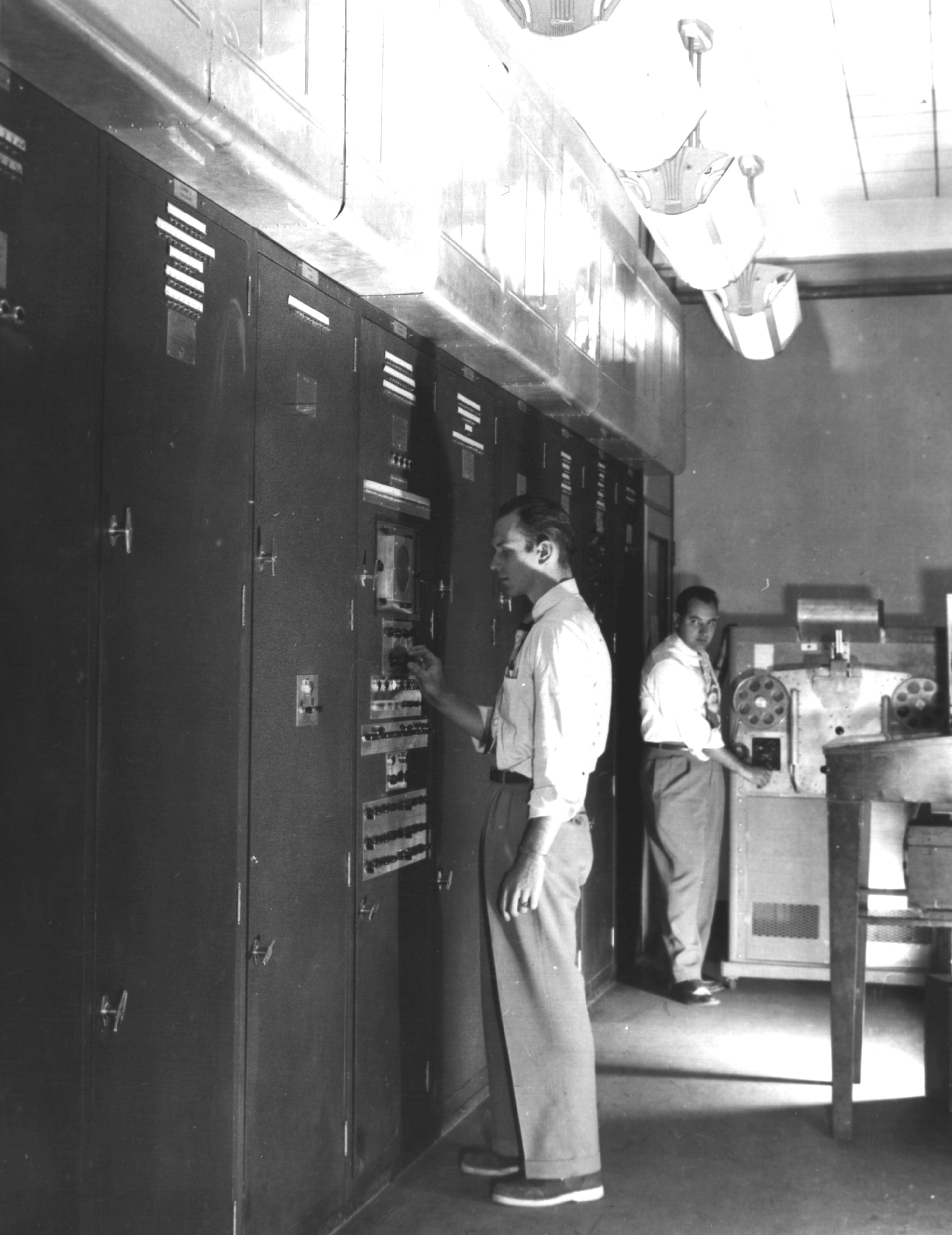
Summary: The Electronic Discrete Variable Automatic Computer (EDVAC) represents a pivotal leap in machine architecture, arriving at the Ballistic Research Laboratory on August 31, 1949, to introduce the world to the efficiency and reliability of stored-program binary logic.
Delivered to the Ballistic Research Laboratory in 1949, the EDVAC stands as a monumental transition from machines that were hard-wired for singular tasks to flexible systems capable of performing diverse operations through internal memory. While earlier systems like the eniac" class="text-accent hover:underline font-semibold">ENIAC relied on manual patch-cable reconfiguration to switch between problems, the EDVAC utilized a stored-program design. This meant the instructions for a task could be kept in the computer's memory alongside the data, allowing the machine to transition between different types of calculations almost instantaneously.
| Historical Attribute | Milestone Registry Value |
|---|---|
| Classification Type | machine |
| Chronological Date | 1949-08-31 |
| Coordinates / Location | Cambridge, Massachusetts |
| Curation Authority | Nick Hodder + MIA |
| Milestone Importance | standard Milestone |
How does EDVAC fit into the history of artificial intelligence?
The development of the EDVAC was essential to the trajectory of artificial intelligence because it provided the first standardized "brain" for complex computation. Before this machine, the concept of a "universal" machine remained largely theoretical, as seen in the work of Alan Turing. By implementing the binary number system—a shift from the decimal-based architecture of the eniac" class="text-accent hover:underline font-semibold">ENIAC—the EDVAC simplified the logic needed for machines to "think" through arithmetic and symbolic operations. This binary foundation is the same logic that underpins every modern neural network and algorithm, from the early SNARC Neural Simulator to the highly complex The Transformer Paper.
What are the core technical achievements of EDVAC?
The EDVAC’s most significant achievement was its adoption of a serial binary architecture. Whereas the eniac" class="text-accent hover:underline font-semibold">ENIAC utilized roughly 18,000 vacuum tubes, the design principles behind the EDVAC enabled similar computational power with a vastly reduced tube count—approximately 3,500 tubes—marking a roughly 80% increase in component efficiency. It introduced the use of ultrasonic delay lines for memory, which allowed the machine to store data as pulses of sound waves circulating through tubes of mercury. This was a critical step in enabling the machine to execute instructions stored in its own internal registry, a process that allowed for the automation of logical flow control, such as conditional branching.
Why is the legacy of EDVAC significant to modern computing?
The legacy of the EDVAC lies in the "Von Neumann architecture," a design standard that keeps the processing unit and memory separate while allowing them to interact through a unified bus. This structure remains the standard in virtually all electronic computers today. By proving that a machine could store its own instructions, the EDVAC paved the way for the development of software, high-level languages, and, eventually, the complex symbolic processing required for early AI research like the Logic Theorist. Without the binary, stored-program foundation established in 1949, the progression toward machine learning and large-scale data processing would have lacked the necessary logical framework to scale.