Deep Blue Chess Machine
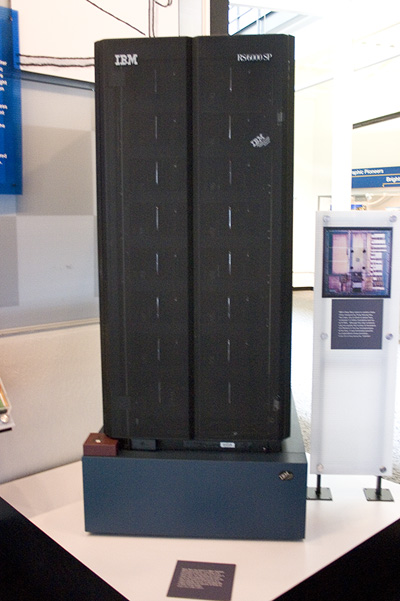
Summary: On May 11, 1997, the IBM supercomputer known as Deep Blue secured a historic victory in New York City, becoming the first machine to defeat a reigning world chess champion, Garry Kasparov, in a formal tournament match.
Deep Blue was a purpose-built supercomputer designed by IBM to solve the complex strategic problem of chess. In a high-stakes rematch held in May 1997, the machine defeated Garry Kasparov—widely considered the greatest chess player in history—over six games. This event, hosted in New York City, served as a global demonstration that specialized hardware could outperform human intuition in domains previously thought to be the exclusive domain of human cognition.
| Historical Attribute | Milestone Registry Value |
|---|---|
| Classification Type | machine |
| Chronological Date | 1997-05-11 |
| Coordinates / Location | New York City, New York |
| Curation Authority | Nick Hodder + MIA |
| Milestone Importance | godfather Milestone |
How does Deep Blue Chess Machine fit into the history of artificial intelligence?
The victory of Deep Blue represents a critical inflection point in the timeline of machine intelligence, succeeding decades of research into game-playing algorithms. Early pioneers like Samuel Checkers Program laid the groundwork for heuristic search, while the theoretical foundations established by Alan Turing envisioned a day when machines could exhibit behavior indistinguishable from human thought. Throughout the Dartmouth Workshop era and the subsequent AI Winter 1, researchers struggled to bridge the gap between simple symbolic logic and complex strategy. Deep Blue shifted the paradigm from general-purpose problem solving to high-performance, domain-specific hardware, proving that computational brute force combined with clever pruning could conquer an intellectual challenge once considered a bastion of human genius.
What are the core technical achievements of Deep Blue Chess Machine?
Deep Blue was an engineering marvel, utilizing a massive parallel architecture. At its heart were 480 custom-designed VLSI (Very Large Scale Integration) chess chips. These specialized processors allowed the machine to evaluate approximately 200 million board positions per second. The system utilized an alpha-beta search algorithm, an optimization technique that discards "branches" of possibilities that cannot mathematically improve the current score, thus focusing its processing power on the most promising lines of play. By integrating these custom chips into a powerful RS/6000 SP supercomputer, the developers created a system that could look significantly deeper into the game tree than any human player, including the world champion. This hardware-driven approach allowed it to maintain high performance without the limitations of general-purpose software, ensuring that every cycle was dedicated to tactical analysis.
Why is the legacy of Deep Blue significant to modern computing?
The legacy of Deep Blue extends beyond the game of chess. It demonstrated the efficacy of parallel computing and specialized hardware accelerators—concepts that define the modern era of high-performance computing, including the development of GeForce GPU Coined technology and the massive TPU v4 Supercluster. While modern AI has transitioned toward neural networks and deep learning—as seen in AlphaGo vs Lee Sedol—Deep Blue provided the essential proof of concept that machines could achieve elite levels of competency through sheer structural optimization. Its success moved AI out of the realm of abstract laboratory theory and into the public consciousness as a formidable tool. The transition from the search-based methods of the 1990s to the adaptive learning seen in systems today is a direct evolutionary path, where the need for speed, parallel throughput, and specialized silicon remains a constant requirement for advancement in the field.